
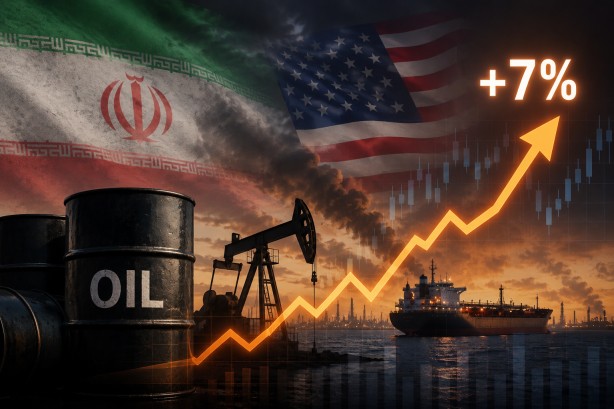
Global oil markets faced a significant jolt as prices escalated over 7% amid escalating military tensions in the Middle East, involving Iran, the United States, and Saudi Arabia. The latest conflicts have sparked fears of potential disruptions to the global energy supply chain. Brent crude saw a steep rise, nearly 8%, reaching around $90.75 per barrel, while West Texas Intermediate (WTI) increased by almost 7%, settling at approximately $84.76 per barrel. These sharp hikes reflect the market’s anxiety over a potential prolonged regional conflict as military exchanges intensify.
The recent surge in oil prices was provoked by Iran’s Islamic Revolutionary Guard Corps (IRGC), which claimed responsibility for launching ballistic missiles aimed at U.S. military facilities in Jordan. This was purportedly in retaliation to recent U.S. military actions. In a parallel move, American and Saudi forces executed coordinated strikes on Iran-backed militant positions in Iraq, focusing on logistics and weapons sites linked to ongoing drone attacks targeting military and energy infrastructures. These developments have exacerbated fears of escalating conflict impacting energy supply routes.
Maritime security concerns have also been thrust into the spotlight. The IRGC reported that its naval forces intercepted and attacked three oil tankers in the Strait of Hormuz, citing the vessels’ failure to comply with navigation warnings. Compounding these tensions, Yemen’s Houthi rebels have asserted they targeted a Saudi-affiliated oil tanker in the Red Sea, further escalating threats to commercial shipping activities in the region.
The instability has heightened apprehensions about potential disruptions in two of the world’s critical energy transit routes: the Strait of Hormuz and the Bab el-Mandeb Strait. Analysts caution that continued assaults on shipping and energy infrastructure could sustain elevated oil prices and contribute to increased volatility in global markets. With the situation remaining volatile, stakeholders are closely monitoring developments that could further impact the stability of energy supplies worldwide.
