
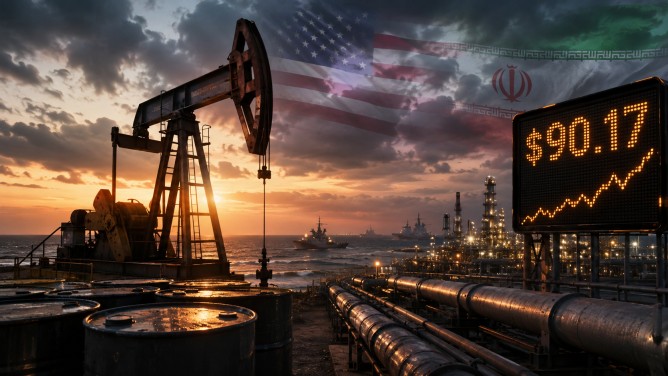
Oil prices have surged significantly following the expiration of a two-month negotiation period between the United States and Iran without reaching a peace agreement. This development has raised alarms about the potential continuation of the conflict and its impact on global energy supplies. Brent crude prices have surpassed $90 a barrel, peaking at approximately $91.63, the highest since late July. The increase comes amidst demands from U.S. President Donald Trump for Iran to surrender, coupled with warnings that diplomatic efforts might fail, possibly escalating the conflict.
Particular concern has been directed toward the Strait of Hormuz, a vital artery for global oil shipments. There has been a noticeable decline in the number of commercial vessels traversing this route, fueling worries about sustained disruptions to oil supply chains. The strategic waterway’s security has been further put in doubt following a reported attack on a cargo vessel, which has intensified apprehensions about the safety of maritime shipping in the area.
Investors are now bracing for a potentially extended period of disruption in oil supplies, as any prolonged closure or reduced movement through the Strait of Hormuz could exert additional upward pressure on crude oil prices. The region’s instability has prompted analysts to caution that the ongoing Middle Eastern conflict, alongside the war in Ukraine, might trigger further shocks to the global energy markets, possibly resulting in increased oil and gas prices.
Iran’s potential shift towards a more aggressive military posture if negotiations falter adds another layer of complexity to the already tense situation. With the geopolitical landscape fraught with uncertainties, the ripple effects on energy markets could be profound, affecting not only oil prices but also the broader economic equilibrium.
