
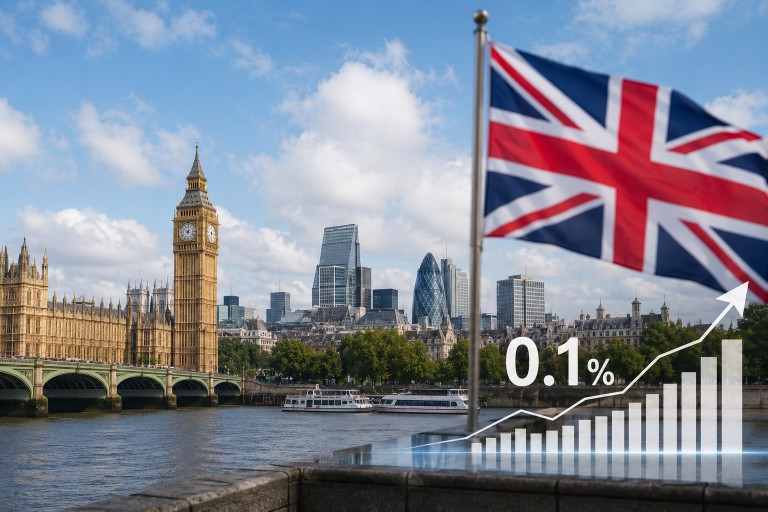
The UK economy witnessed a slight improvement in May, expanding by 0.1% after experiencing a similar contraction the previous month. This modest growth, highlighted in recent economic data, was primarily supported by a 0.3% rise in the services sector. However, this gain was somewhat counterbalanced by declines in other areas, including a 0.5% drop in production and a 0.8% decrease in construction activities.
Among the various sectors, scientific research and development emerged as the standout performer, achieving a notable 5.1% increase over the month. This sector’s robust performance provided a significant boost to the overall economic landscape during this period.
Analyzing the broader picture over the three months leading up to May, the UK economy grew by 0.7%. This figure marks a slight deceleration from the 0.8% growth observed in the preceding three-month span. Economists have noted the country’s economic resilience despite facing challenges such as heightened energy prices and the ongoing global uncertainties stemming from the Middle East conflicts.
Nevertheless, there are concerns on the horizon. Experts warn that rising energy costs and persistent supply chain disruptions could threaten future economic stability. Such factors continue to be areas of concern for analysts monitoring the UK’s economic health.
In light of these developments, the International Monetary Fund has revised its annual growth forecast for the UK upwards to 1%. Still, analysts caution that the outlook remains clouded by ongoing geopolitical tensions, underscoring the fragile nature of current economic conditions.
