
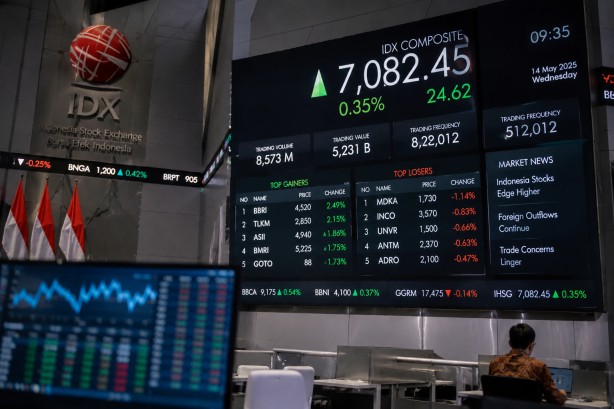
During the week ending July 24, Indonesia’s Jakarta Composite Index (JCI) experienced a 0.34% increase, driven by heightened trading activity. This rise occurred despite ongoing foreign investor outflows and lingering uncertainty in the global economy. The market capitalization of the Indonesia Stock Exchange climbed to Rp 10,870 trillion, while the average daily trading turnover saw a significant 41% boost, reaching Rp 19.76 trillion.
Nevertheless, foreign investors continued to offload Indonesian assets, resulting in net sales with cumulative outflows amounting to Rp 79.09 trillion for the year. This trend highlights a cautious stance towards the country’s financial instruments amid global economic challenges.
Contributing to the cautious market sentiment were the rising global oil prices, which followed escalating tensions in the Middle East. Additionally, the implementation of new US tariffs on imports from several of its trading partners, including a 10% tariff on specific Indonesian goods, posed further concerns.
Despite these pressures, Indonesia’s Finance Ministry has expressed confidence in the nation’s fiscal resilience. While acknowledging that increased oil prices might exert pressure on the 2026 state budget, the ministry maintained that Indonesia’s overall fiscal health remains stable.
